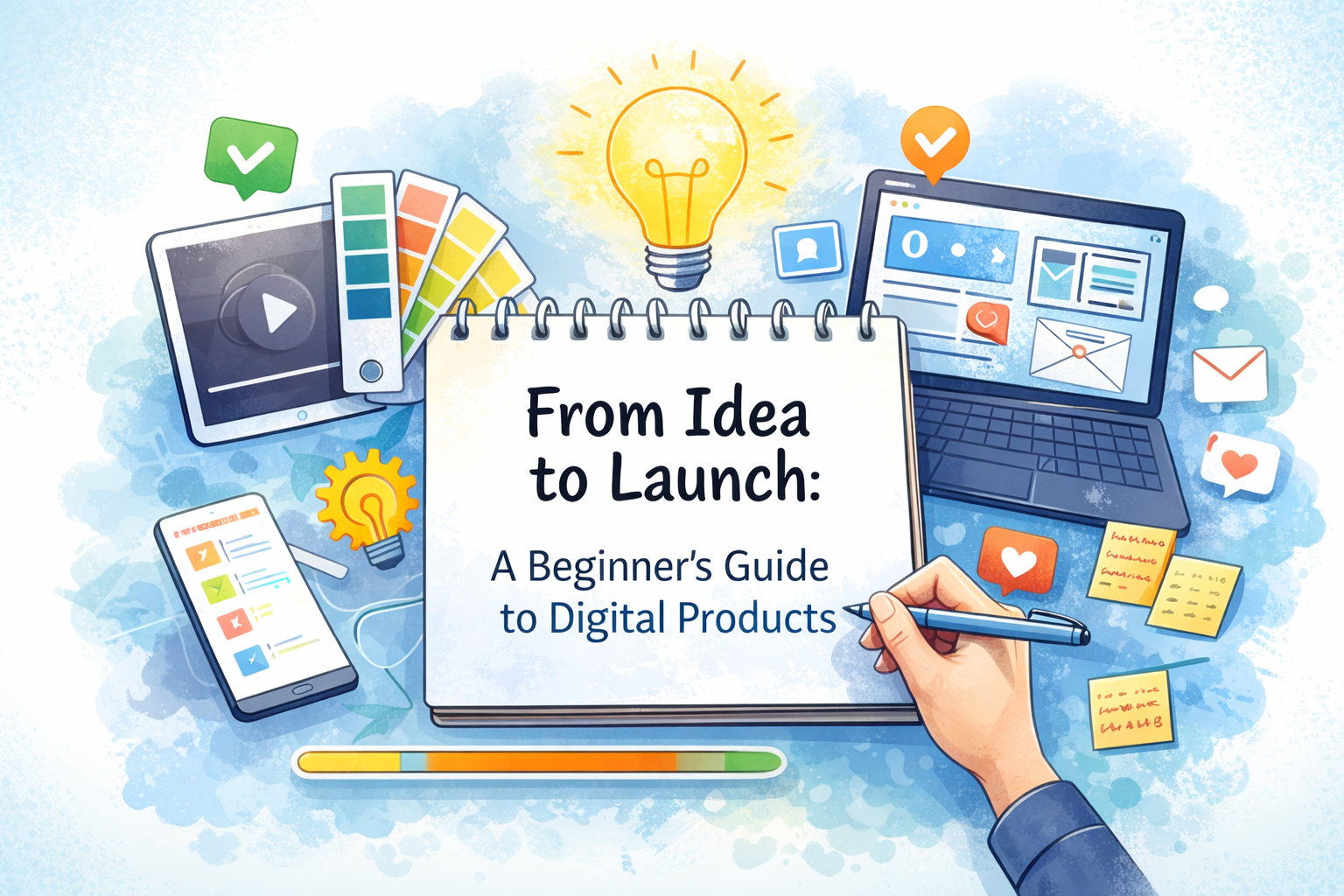
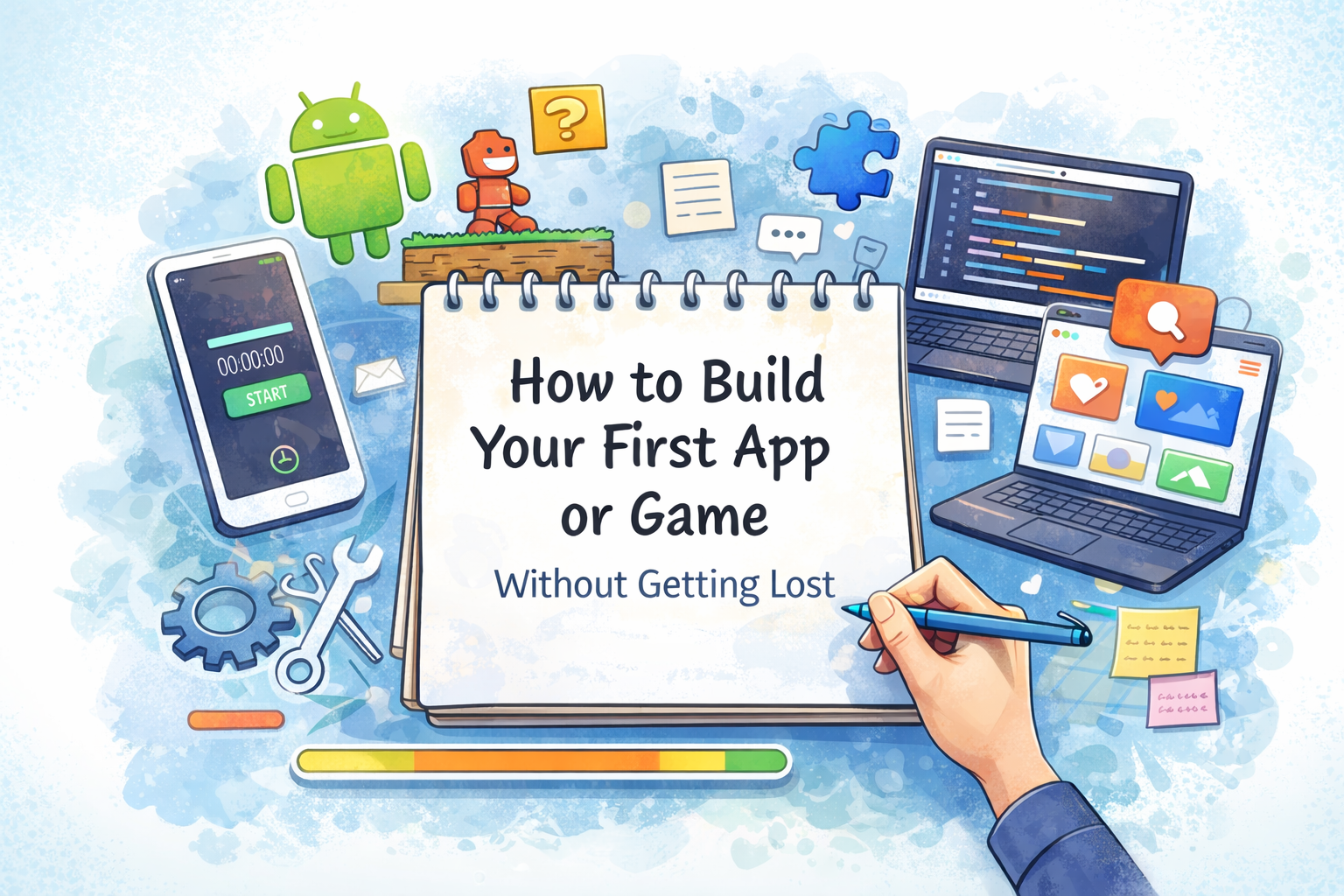
From Idea to Launch: A Beginner’s Guide to Digital Products
Most beginners believe that creating a digital product starts and ends with a brilliant idea. In reality, an idea is only the beginning. The real challenge is turning that idea into something finished, usable and shared with others.
This guide is written for beginners who want to move from concept to launch without pressure or unrealistic expectations. It is not about fast success or guaranteed income. It is about understanding the process, learning through action and building confidence by finishing what you start.
Start Small and Focus on Completion
Big ideas are exciting. They feel meaningful and often come with high expectations. Unfortunately, they are also the reason many projects never reach completion.
Your first digital product should be intentionally small. A finished small product is more valuable than a large unfinished one. Examples of beginner-friendly digital products include:
- A short ebook on a topic you know well
- A simple mobile app that solves one specific problem
- A small collection of templates or checklists
- A mini online course with one or two lessons
- A basic online tool or calculator
Perfection is not the goal. Completion is. Every finished project teaches practical lessons that planning alone never can. You learn how long tasks actually take, where you get stuck and how to move forward despite uncertainty.
Validate the Idea Before You Build
Validation is the process of checking whether people are interested in your idea before you invest significant time building it. Skipping this step is one of the most common beginner mistakes.
Simple ways to validate an idea include:
- Talking to people in online communities related to your topic
- Asking direct questions through social media or email
- Creating a basic landing page and measuring interest
- Sharing a concept or prototype and collecting reactions
Validation does not guarantee success, but it reduces wasted effort. Even a small sign of interest is better than building in isolation. A product that solves a real problem, even for a small audience, has a stronger foundation than one built on assumptions.
Choose Tools That Support Progress
Many beginners delay progress by searching for the perfect tool. In reality, no tool is perfect. The best tool is the one that helps you finish.
Depending on what you are creating, simple tools are often enough:
- Writing an ebook or guide: Google Docs or Notion
- Creating templates or designs: Canva or Figma
- Building a basic app: no-code or low-code platforms
- Recording lessons: a phone camera and basic editing software
The goal at this stage is not optimisation or scale. It is learning how to move from idea to delivery. Tools can always be changed later. A finished product cannot be replaced by endless preparation.
Break the Project Into Clear Steps
Large goals feel overwhelming when they remain abstract. Breaking your project into small, clear steps makes progress manageable.
For example, a simple online course might include:
- Outline the lessons
- Write the first lesson
- Record audio or video
- Edit the content
- Upload and organise the materials
A small app might involve:
- Designing the main screen
- Adding one feature at a time
- Testing frequently
- Adjusting based on results
Each step should be small enough to complete in a short session. Consistent progress builds momentum and reduces the risk of burnout.
Expect Mistakes and Treat Them as Feedback
Mistakes are unavoidable. Features may not work as expected, users may misunderstand instructions or design choices may need revision. This is normal.
Beginners often view mistakes as failure, but they are simply feedback. Releasing something imperfect gives you real information that planning cannot provide. Every issue highlights an opportunity to improve.
Learning to accept imperfections is part of becoming a confident creator.
Launch Quietly and Observe
Your first launch does not need to be public or polished. Sharing your product with a small group is often more useful than a large announcement.
Pay attention to:
- How people use the product
- Where they hesitate or get confused
- What they find useful or unnecessary
This feedback is invaluable. Quiet launches reduce pressure while giving you insights that help shape future improvements.
Improve, Reflect and Repeat
Your first digital product is primarily a learning experience. Each new project builds on the lessons of the previous one.
Over time, you will notice that tasks which once felt overwhelming become familiar. Confidence grows through repetition, not through waiting for the perfect moment.
Practical Advice for Beginners
- Set realistic deadlines and work consistently
- Document your process and lessons learned
- Focus on solving a clear problem
- Avoid chasing perfection
- Acknowledge every finished project as progress
The Real Victory
Creating digital products is often quiet and challenging. The true achievement is not popularity or income, but the ability to take an idea and bring it to completion.
Finishing your first product changes how you see yourself as a creator. Each completed project makes the next one easier. Over time, creation becomes a habit rather than a struggle.





No comments yet. Be the first to comment!